From the Field

Operational observations, compliance frameworks, and field intelligence from twelve years embedded in the industries we serve.

Care coordinator at a desk reviewing a patient file with a laptop open beside them in a warm clinical environment
Read More

Why Continuing Care Operations Lose Visibility Between Care Events

Continuing care organizations invest heavily in care planning and clinical documentation at the point of assessment. The visibility gap is not at those moments. It is in the intervals between them, the periods where resident status is changing, family expectations are forming, and the operational record is not keeping pace with either.


Campaign canvasser in conversation at a residential doorstep with tablet in hand in late afternoon light
Read More

Why Political Outreach Fails at the Delivery Layer Before It Fails at the Messaging Layer

Well-resourced political and advocacy campaigns with strong messaging still fail to move numbers at scale. The conversation about outreach effectiveness focuses almost entirely on message quality, targeting strategy, and voter data. The delivery infrastructure, the system that puts a human voice in front of a contact, is treated as a commodity. It is not.

Healthcare administrator reviewing a compliance checklist at a desk in a clean clinical office environment
Read More

HIPAA-Compliant Framework for Family Communication in Continuing Care

Most continuing care facilities operating with informal or unstructured family communication processes are carrying HIPAA exposure they have not formally assessed. The gap between what staff communicates verbally or by text and what HIPAA actually permits is wider than most facilities realize.

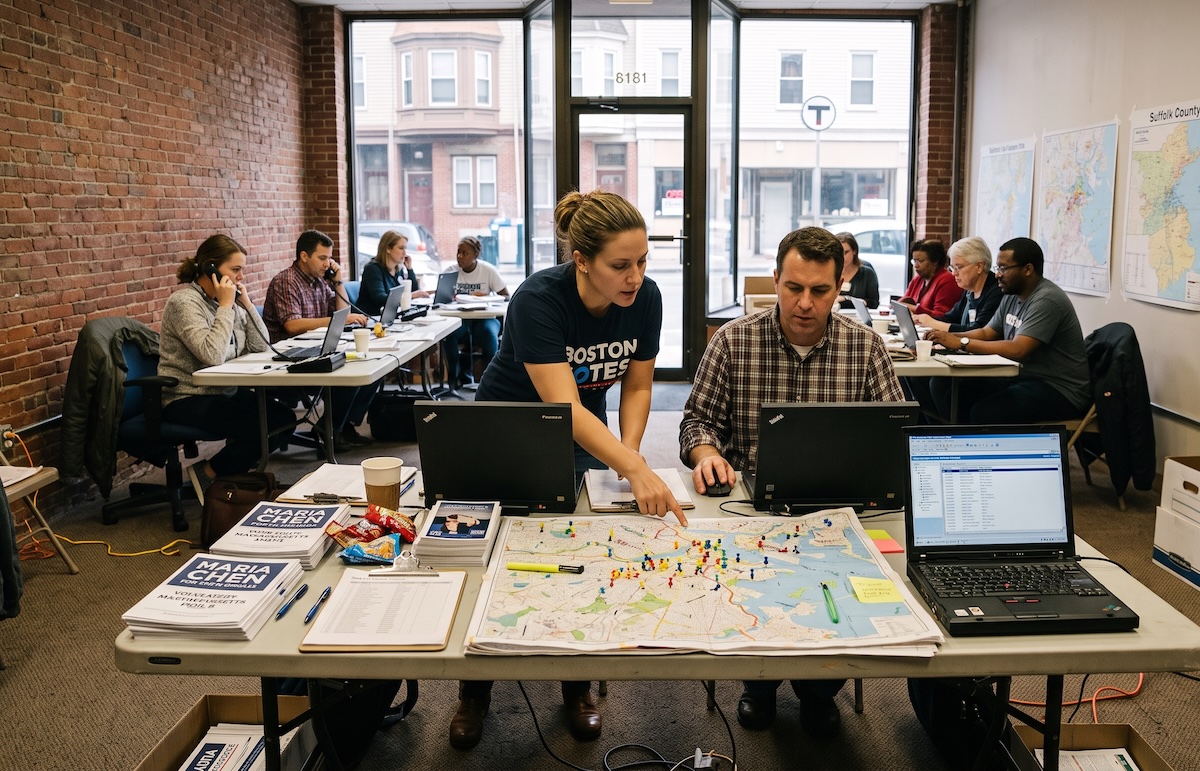
Campaign field office with coordinators working at laptops surrounded by contact lists and compliance documentation
Read More

TCPA and CRTC Compliance for High-Volume Outbound Voice Operations

Most TCPA and CRTC violations in high-volume outbound operations are not the result of intentional non-compliance. They are the result of organizations treating contact list management as an administrative task rather than a legal infrastructure requirement.

Field service technician reviewing incomplete paperwork at the end of a shift in an industrial setting
Read More

Documentation Failure in a Field Operation and the Operational Cost It Created

Documentation failures in field operations are not isolated incidents. They are the compounding output of a workflow that was never designed to capture data at the point of observation. The cost is not one missed report. It is a systemic gap that touches billing, compliance, asset traceability, and liability simultaneously.

Abstract visualization of data moving through a network rendered as glowing nodes on a dark background
Read More

90-Day Data Exfiltration Pattern Prior to Executive Departure

The pattern of data movement prior to an executive departure is recognizable, predictable, and almost always begins 60 to 90 days before the resignation letter arrives. By the time the letter is on the desk, the most consequential data has already moved.

Field service technician in safety vest reviewing a tablet on a job site at dawn
Read More

Why Generic Enterprise Software Fails Trade and Industrial Operations

Field service organizations do not have a software adoption problem. They have a software fit problem. Generic enterprise platforms fail in trade and industrial environments because they were designed for office environments and retrofitted for the field. The physical conditions of the work make compliance with their documentation requirements functionally impossible.

Security operations center with analysts reviewing data dashboards at night
Read More

Why Perimeter Security Was Never Designed for Insider Risk

Organizations that experience intellectual property loss to departing employees rarely have weak perimeter security. The problem is that perimeter security was never designed for the threat they are facing. Credentialed users moving data through approved applications do not look like intrusions. They are not.